
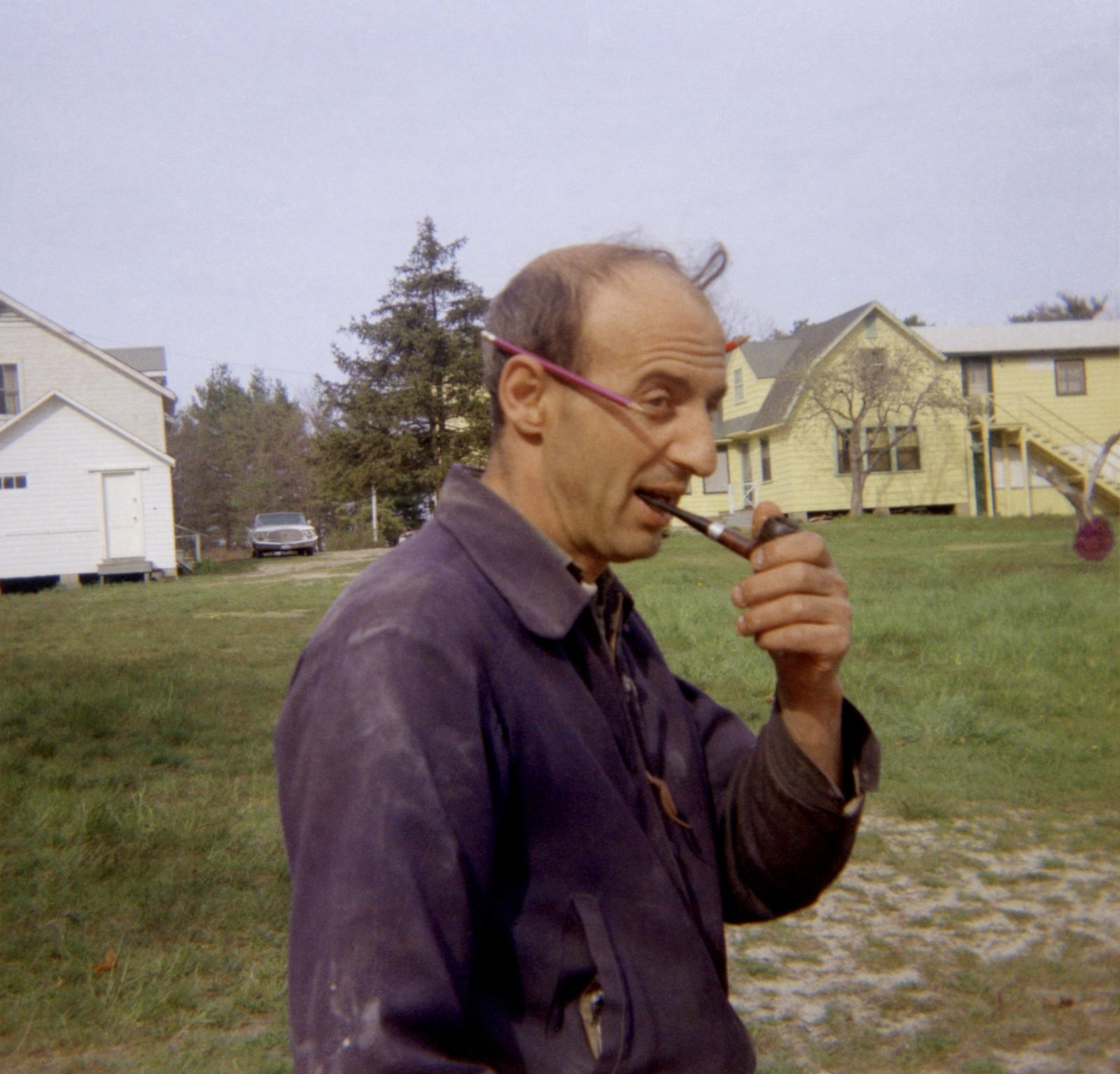

Frank joined the Army after Pearl Harbor, because that’s what young men from New Hampshire did. A bonus was escaping the rotten odor of the paper pulp plants in his hometown of Berlin, a sulfide stench that permeated the air for miles around, a stink that soaked into everything and caused your bed, your clothes, your hair, causing even the earth to reek from the nauseating fumes. Going to war was part patriotism, part thrill, part fear, and part relief. He never considered going back.
After the war, Frank mustered out from Fort Devens in Massachusetts. He met a local girl, a lass whose raven hair belied her Scandinavian heritage. With her dark locks and his swarthy Italian complexion, Frank and Eleanor made a handsome couple. They settled in nearby Fitchburg, a tired mill town on the Nashua River. He couldn’t escape the paper industry even there, for the city had mills aplenty. These mills made paper from the Berlin pulp, and the dead murky river glowed a different color every day. But at least it didn’t smell.
Few people could pronounce his last name, much less spell it. Everyone simply called him Frank or, “Mr. G.” He found work as a machinist in the growing plastics industry. His knowledge of French helped him become a shop foreman, as he could converse with all the Canadians pouring over the border. He raised a family, a boy and two girls. Frank was all about family.
Mr. G converted his back yard into a sports complex, attracting all the neighborhood children. We played tag, dodge ball, hide-and-seek, football, and basketball. Our baseballs broke windows which he made us fix. In the fall he would fill his yard with Christmas trees and sell them for his church. In the winter he flooded the yard and turned it into a hockey rink. More windows died, but from pucks, and we fixed those also. We careened down the snowy hillside behind his house on our sleds, flying saucers, and toboggins.
Frank Guglietti worked long hours at the machine shop, mostly on his feet. He could walk and skate, but not run, as he never fully recovered from the shrapnel in his leg. His normal gait was a hustling shuffle. In the evening he would collapse into his recliner, a few strands of wispy hair striving but failing to cover his shiny pate. Chronic weariness would show in his long face and baggy eyes as he drifted off to sleep watching the Bruins on TV, surrounded by pink shag carpet, his family, and his dog. He jokingly blamed his baldness on his kids, a fact they proudly repeated to all who would listen. They called him Chrome Dome, and he chuckled.
Frank had a suit for church, weddings, and funerals, but you would mostly see him in his work clothes—green cotton duck pants and a matching shirt. His scent was one of machine oil and tobacco, energy and warmth. He would speak in short bursts, dote on his wife, and correct his kids.
Mr. G adopted neighborhood strays; those needing a father, affection, or just a comforting place. We were white and black, rich and poor, loud and quiet, and all needing something undefinable. I lived around the corner with my parents. Frank called me his second son. He took us fishing, camping, to the lake, and to a bible camp. He took us to ballgames, and the beach.
One summer he bundled up his entire family plus two of us hangers on into a brand-new Vista Cruiser station wagon and drove to Florida. We camped up and down the eastern seaboard. We set our campsite’s picnic table on fire the first night. We visited Niagara Falls, and the New York Worlds Fair. Insects bit us, rain soaked us, and the sun burned us. It was the best time of our lives.
Frank would walk into a room, and people would migrate toward him like iron filings attracted to magnetic north. You could count on him for a hearty handshake, a buss to the cheek, and a warm hug. Pre-teens and teenagers particularly loved him. He was jovial but not loud. He teased. He would tell you that in spite of what he had heard about you, he thought you were all right. He was everybody’s friend.
Mr. G constantly worked on his house and made it larger, taller, and nicer for his family. He led work crews at the church camp, renovating and constructing buildings. He taught us carpentry, electricity, plumbing, and self-reliance. The only time he got angry was when we roughhoused in his attic, and a foot mysteriously appeared through his new kitchen ceiling. He made us fix it.
One day Eleanor had a heart attack at work. The ambulance arrived late, and she spent the rest of her years bound to a wheelchair. Frank took her home and dutifully cared for her until she died. She didn’t always know where she was, but she always knew she was loved.
Frank’s church threw him a surprise 80th birthday party on his 79th birthday, because someone got his birth year wrong. Old friends returned home from great distances to wish him well. Mystery guests played “What’s My Line?” to great effect. The British couple who had helped him recover from his war wounds called from England and wished him many happy returns. Frank sat on the altar stage and beamed with pride.
Fate had a hand in Frank’s family and friends celebrating his 80th birthday a year early. Sadly, cancer took Frank from us a few months shy of his true 80th birthdate.
Mr. G was a wonderful man and a great father. He worked, he lived, he laughed, and he loved. His family and friends will never forget him. I am proud to be considered member of both those groups and will remember his warm smile and Yankee work ethic forever.